
Botox Injection Sites and Units by Treatment Area
Key Takeaways
Botox units are a measure of potency, not volume, and the right dose varies by treatment area, muscle strength, and patient goals. Upper face zones like the forehead, frown lines, and crow’s feet typically fall in the 10–30-unit range per area, while the masseter requires 15–50 units per side and underarm hyperhidrosis is treated with around 50 units per axilla per FDA prescribing information. No unit count is universal: in-person assessment by a qualified injector is the only reliable way to determine the correct dosage for each patient.
Standard botox injection sites and units vary by muscle zone: the forehead takes 10-30 units, frown lines 15-30, crow’s feet 5-15 per side, the masseter 15-50 per side, and underarm hyperhidrosis around 50 units per axilla. These ranges exist because botox units measure potency, not volume, and each area has different muscle thickness, function, and movement demands. The actual dose for any patient shifts based on muscle strength, age, desired outcome, and treatment history, which is why the ranges below are a starting point rather than a fixed prescription.
Want a professional assessment of your folds? Start with a one-on-one consultation.
What Botox Units Actually Mean
Botox units measure potency, not volume. One unit is a standardized biological dose of botulinum toxin, specific to each brand. Botox, Dysport, and Xeomin are not interchangeable on a unit-for-unit basis: each uses a different assay method, so 20 units of one product is not equivalent to 20 units of another.
Each facial zone has different muscle thickness, function, and movement requirements. The forehead handles brow elevation and broad horizontal expression; the masseter handles forceful chewing. Those two muscles need very different amounts to achieve the intended result. The right dose is a clinical judgment call, not a formula from a chart.
Botox Units Per Area: Upper Face
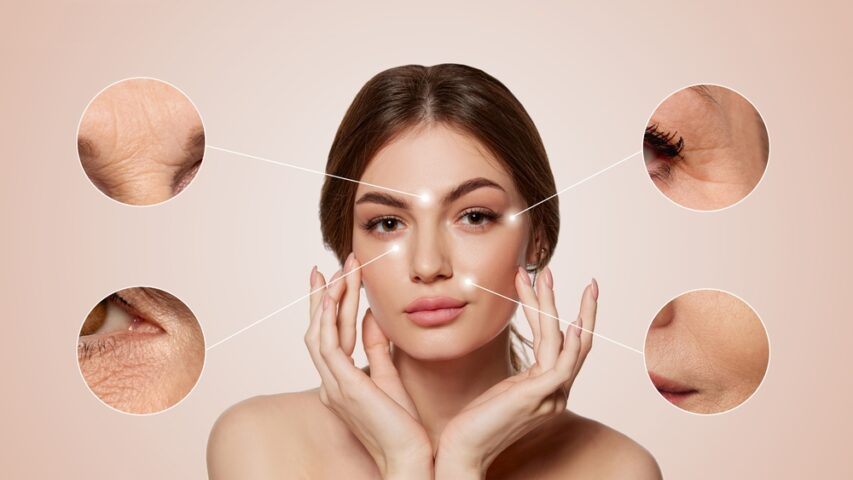
The upper face is where the majority of Botox treatments are concentrated. Typical ranges used in clinical practice are as follows:
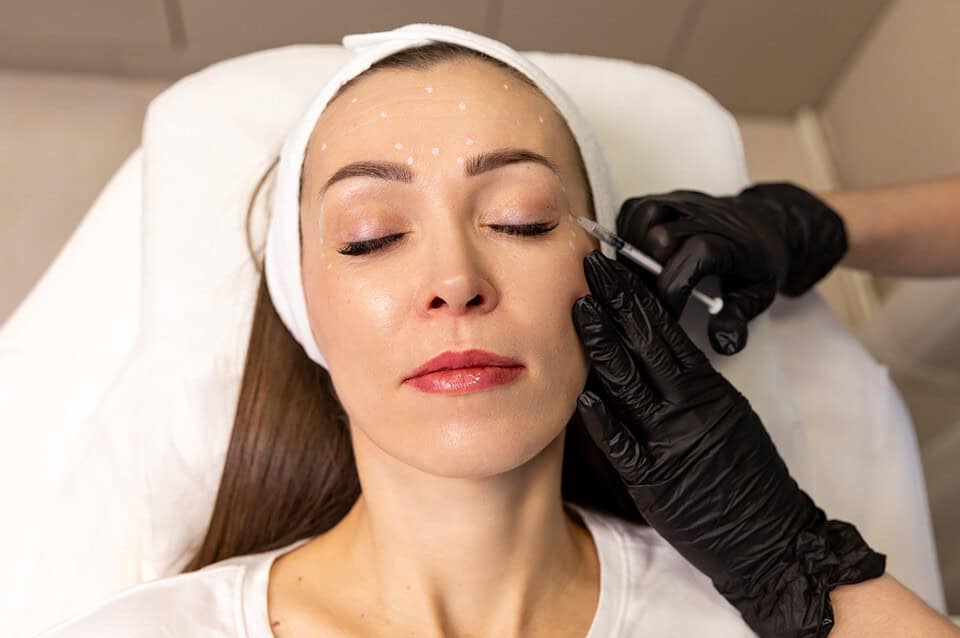
- Forehead (frontalis): approximately 10–30 units across 4–8 injection points, softening horizontal lines while preserving brow movement.
- Frown lines / glabellar lines (“11s”): approximately 15–30 units across the corrugator supercilii and procerus muscles, commonly placed at around 4 units per point across five sites.
- Crow’s feet (lateral canthal lines): approximately 5–15 units per side across three injection points. The skin here is thin and delicate, so precise placement matters.
- Eyebrow lift: approximately 2–5 units per side, relaxing the depressor muscles at the brow tail to allow a slight lift.
Botox Units Per Area: Mid and Lower Face
The lower face uses smaller, more targeted amounts, with careful placement given how closely the muscles for speaking, smiling, and chewing overlap.
- Bunny lines (nasal wrinkles): approximately 5–10 units total, split across both sides of the nose.
- Lip lines and lip flip: perioral lines typically use 2–6 units; a lip flip along the upper border requires approximately 4–10 units.
- Chin dimpling (mentalis): approximately 2–6 units placed centrally to smooth the orange-peel texture on the chin.
- Neck bands (platysma): approximately 25–50 units along the vertical cords, depending on band severity and neck anatomy.
Jawline and Masseter Botox Units
The masseter is a powerful chewing muscle at the angle of the jaw. In some patients it enlarges due to genetics, chronic teeth grinding, or heavy chewing, creating a square facial appearance. Botox injected into the masseter causes it to relax and gradually reduce in size, producing a slimmer, softer jawline.
Jawline contouring typically requires 15–50 units per side, as confirmed by Nirunda Clinic’s FAQ for this procedure. Muscle bulk varies significantly between patients: men with hypertrophic masseters typically need doses at the higher end, while patients treating mild asymmetry need far less.
Beyond aesthetics, masseter Botox can ease jaw tension and reduce symptoms associated with teeth grinding and TMJ dysfunction for some patients.
Botox for Underarm Sweating: Units and What to Expect
Hyperhidrosis, or excessive sweating, is a recognized medical use of Botox alongside its cosmetic applications. The US FDA’s prescribing information for Botox specifies a recommended dose of 50 units per axilla for severe primary axillary hyperhidrosis, injected intradermally across 10–15 sites per underarm.
At Nirunda Clinic, underarm Botox controls excessive perspiration for up to six months and can be re-administered when sweating returns, with no downtime required.
Factors That Change Botox Units Per Area
Reference ranges are a starting point, not a prescription. Several variables shift the number of units needed in either direction:
- Muscle strength and bulk: larger or stronger muscles, more common in men, typically need more units for the same relaxation effect.
- Age and wrinkle depth: lines set over years of muscle movement may need a higher initial dose than early-stage dynamic wrinkles.
- Desired outcome: a natural, expressive result uses lower dosing than a smoother, more settled look.
- Prior treatment history: patients who receive Botox regularly often find muscle weakness builds over time, sometimes allowing lower doses to maintain the same result.
No reference chart replaces a face-to-face assessment. Accurate botox units per area can only be determined by evaluating a patient’s anatomy, muscle movement, and goals in person.
Botox Treatment at Nirunda Clinic, Bangkok
Nirunda Clinic’s board-certified dermatologists have over a decade of experience in Botox for wrinkle reduction, jaw slimming, and hyperhidrosis, treating both local and international patients. Treatment areas include the forehead, low eyebrows, frown lines, crow’s feet, lip lines, downturning corners of the mouth, dimpled chin, and neck bands, along with masseter contouring for V-shape face results and underarm hyperhidrosis. All injectable products used are US FDA-approved, and dosage is determined through in-person assessment rather than a standard protocol.
Explore botox injection in Bangkok at Nirunda Clinic for a personalized dosage assessment. Treatments cover everything from crow’s feet and frown lines to jaw slimming and underarm sweating, with care tailored to your anatomy and goals.
References:
BOTOX (onabotulinumtoxinA) Prescribing Information. Retrieved in June, 2026 from https://www.accessdata.fda.gov/drugsatfda_docs/label/2021/103000s5320lbl.pdf
Real-World Outcomes of a Novel Botulinum Toxin A for Upper Face Aesthetics: Insights From Routine Clinical Practice. Retrieved in June, 2026 from https://www.ncbi.nlm.nih.gov/pmc/articles/PMC12663534/
Frequently Asked Questions About Botox Units Per Area
Q: How many units of Botox per area are typically used?
A: Unit ranges vary considerably by zone. The forehead typically takes 10–30 units, frown lines 15–30, and crow’s feet 5–15 per side. The masseter requires 15–50 units per side, and underarm hyperhidrosis uses around 50 units per axilla per FDA prescribing information. These are reference ranges, not fixed doses. An injector will assess your muscle strength, anatomy, and goals before recommending a specific unit count.
Q: How much Botox per area is needed for a natural look?
A: Achieving a natural result typically means using a conservative dose that relaxes the target muscle without eliminating movement entirely. For the forehead, that often means staying toward the lower end of the 10–30-unit range and treating it alongside the glabellar complex to maintain brow balance. For crow’s feet, three precise injection points per side are usually sufficient. The balance between smoothing and preserving expression is a conversation to have with your injector at consultation rather than a number to calculate in advance.
Q: Average Botox units per area: how do men and women differ?
A: Male facial muscles are generally stronger and thicker than female ones, which means men typically require more units to achieve the same degree of relaxation. For the masseter, for example, men with enlarged chewing muscles may need doses at the upper end of the 15–50-unit-per-side range, while women treating mild asymmetry might need considerably less. Injection technique also differs by gender, with placement adjusted to preserve masculine or feminine facial structure depending on the patient’s goals.
Q: Do Botox units decrease over time with repeat treatments?
A: For some patients, yes. With consistent Botox treatments, the target muscles can weaken gradually over time, meaning repeat sessions may maintain the same visual result at a lower dose. This is more commonly observed in areas like the forehead and frown lines than in the masseter, where muscle bulk is closely tied to function. An experienced injector will reassess dosage at each appointment rather than automatically repeating the same unit count.