

What to Know Before Getting Jawline Filler
Key Takeaways
Jawline filler is a non-surgical way to add definition to the jaw and chin using hyaluronic acid, with placement along the jaw angle, jaw body, and chin to build structure. Results last around six to eighteen months and look different by gender, with men typically seeking stronger angles and women a softer contour. Choosing a board-certified injector who maps treatment to your facial anatomy matters more than the specific product brand.
A defined jawline depends on three things: bone structure, how fat sits over the muscle, and the angle where the jaw meets the neck. The bone is fixed. The other two are not, and that is the gap jawline filler is built to address. Injecting hyaluronic acid into the jaw and chin can restore the facial contour without surgery or downtime, yielding immediate visible results. The practical questions to answer first are how it works, what the result actually looks like, and what changes between men and women.
What Jawline Filler Is and How It Works
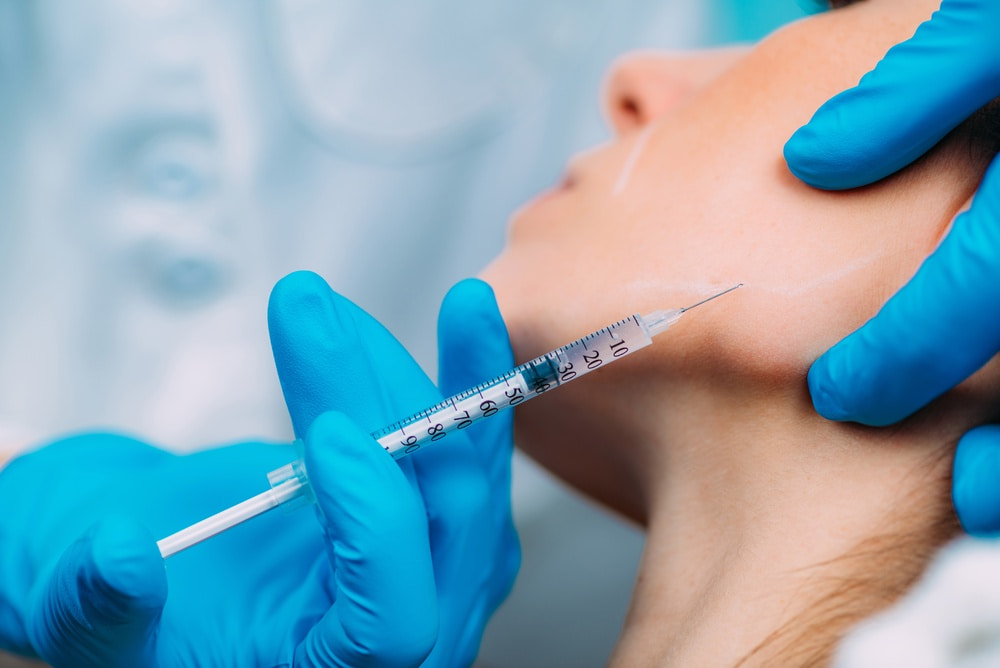
Jawline filler uses hyaluronic acid, a substance the body produces naturally, to add structure where bone has receded, fat has shifted, or the underlying anatomy lacks definition. The injection points are placed along three key zones: the jaw angle to sharpen the corner where the jaw meets the ear, the jaw body to straighten the line running toward the chin, and the chin itself to balance the lower face proportionally.
Jawline filler provides contour and lift without surgery or recovery time, unlike sliding genioplasty or surgical jaw reshaping, but its results are not permanent. This treatment is ideal for individuals seeking enhanced definition in a soft jawline, a smoother contour to address developing jowls, or improved visual harmony between the jaw, chin, and cheekbones.
Jawline Filler Before and After: What to Expect
The most visible change after treatment is a clearer line from the jaw angle to the chin, with the lower face looking more defined from both front and side angles. Filler in jaw before-and-after photos typically show three differences: a sharper corner at the jaw angle, a straighter line along the jaw body, and a smoother transition from jaw to neck.
Results appear immediately at the appointment, though swelling in the first couple of days can make the contour look slightly more pronounced than the final outcome. The look generally settles by around two weeks, when post-procedure swelling resolves and the filler integrates with the surrounding tissue. One session is usually a refinement of existing structure rather than a complete reshaping, and patients with significantly recessed jaws may need a planned series of appointments rather than a single visit.
When reading any before-and-after photo, lighting and angle do a lot of work. A photo taken from below makes any jaw look stronger; harsh top lighting flattens definition. Head position, posture and even whether someone is smiling or relaxed affect how the contour reads. Honest comparison shots use the same camera position, lighting and angle in both images.
How Jawline Filler Differs for Men and Women
The goal of jawline filler differs between male and female patients, and so does the placement and product selection. In men, jawline filler before-and-after photos typically show stronger angles at the jaw corner, a squarer overall jaw shape and clear chin projection. The injector usually maps beard lines beforehand so injection points sit correctly within the patient’s facial hair pattern.
For women, the goal more often shifts toward a slim, defined jaw and a softer V-shape contour from cheekbone to chin, or sometimes a subtle lift to soften a jowl line that has developed with age. For female patients, the placement is typically more conservative, employing smaller volumes in the jawline and chin to preserve feminine features.
The firmness of filler can differ depending on the goal, with higher viscosity “firmer” products providing more structural support for enhanced projection or a squarer angle. Softer products, known for their smooth blending, are often selected for less dramatic contouring, frequently used when a patient desires definition without a pronounced alteration.
Jawline Filler Longevity, Aftercare and Injector Skill
Hyaluronic acid jawline filler generally lasts between six and eighteen months, depending on the product used, individual metabolism and lifestyle factors. People with faster metabolisms, more active lifestyles or those who exercise heavily often see results fade closer to the six-month end of the range.
Aftercare is straightforward but matters. To reduce swelling and let the filler settle correctly, the following should be avoided for the first forty-eight hours:
- Heavy exercise
- Alcohol
- Direct heat from saunas or intense sun
- Touching or massaging the treated area
Mild swelling, redness or small bruises at injection sites usually resolve within a few days.
Most reactions are minor, but severe pain, skin blanching, prolonged numbness or unusual color changes at the injection site warrant immediate clinical attention. These signs may indicate rare vascular complications, which is why injector skill and anatomical knowledge make a real difference. Hyaluronic acid filler is reversible with hyaluronidase, an enzyme that dissolves the filler if a correction is needed.
This demonstrates why technique often outweighs product branding. Refining knowledge of lower face anatomy, including vessel placement and filler layering along the jaw, requires years of practice. Practitioner choice often outweighs filler choice due to variations in outcomes from the same product.

Mapping Your Jawline Filler Plan in Bangkok
Jawline filler works best when the goal is realistic and the planning is done in person. A well-judged session can sharpen the lower face for several months to over a year, with no surgery and no recovery in between. The piece most likely to determine the result is the planning itself: the assessment, the mapping, and the conversation about what the face actually needs.
Jawline filler at Nirunda Clinic is approached as an exercise in balance: the goal is harmony with the rest of the face rather than maximum volume or a single dramatic angle. A board-certified dermatologist personally handles the assessment, injection, and aftercare review, using only US FDA-approved hyaluronic acid fillers such as Juvederm and Restylane. English-speaking consultations are available for international visitors traveling to Bangkok.
Your side profile is worth getting right the first time. Book a consultation for filler in Bangkok at Nirunda Clinic and have a dermatologist map the result with you before any product is selected.
References:
- Dermal Fillers. Retrieved on 8 June, 2026 from https://my.clevelandclinic.org/health/treatments/22667-dermal-fillers
- Dermal Fillers (Soft Tissue Fillers). Retrieved on 8 June, 2026 from https://www.fda.gov/medical-devices/aesthetic-cosmetic-devices/dermal-fillers-soft-tissue-fillers
Frequently Asked Questions About Jawline Filler
Q: How much jawline filler is typically needed?
A: This varies significantly by anatomy and goal. Most patients need between two and four syringes spread across the jaw angle, jaw body, and chin during the first appointment. People with naturally weaker jaw structure or those wanting a more dramatic change may need more, while those seeking subtle refinement may need less. A board-certified injector will assess the face and recommend a specific volume during consultation.
Q: Is jawline filler painful?
A: Discomfort is usually mild. Most clinicians apply a topical numbing cream before treatment, and many modern hyaluronic acid fillers contain lidocaine for added comfort during injection. Patients typically describe the sensation as a brief pinch or pressure rather than sharp pain. Tenderness at injection sites may continue for a few days but is rarely significant.
Q: Can jawline filler be dissolved if I do not like the result?
A: Yes, when hyaluronic acid filler is used. The enzyme hyaluronidase can dissolve HA filler within hours, allowing for adjustment if the contour does not look right or if there is asymmetry. This reversibility is one reason HA filler is the standard choice for jawline contouring rather than permanent options.
Q: Can jawline filler be combined with other treatments?
A: Yes. Jawline filler is often paired with Botox at the masseter to slim a square lower face, or with skin tightening when laxity along the jaw is part of the picture and filler alone cannot lift it. Combinations are usually planned across multiple appointments rather than performed in a single visit, both for safety and so each step’s contribution can be assessed before the next one is added.