

Forehead Filler: How It Works and What to Expect

Key Takeaway:
Forehead filler restores lost volume and lifts the static lines and deep wrinkles that Botox alone cannot fully smooth, which is why the two are often used together. Because the forehead sits over blood vessels linked to the eye, it is a higher-risk area where the injector’s skill and technique are critical. Hyaluronic acid fillers are the standard choice; the result settles at around two weeks, and it generally lasts six to eighteen months.
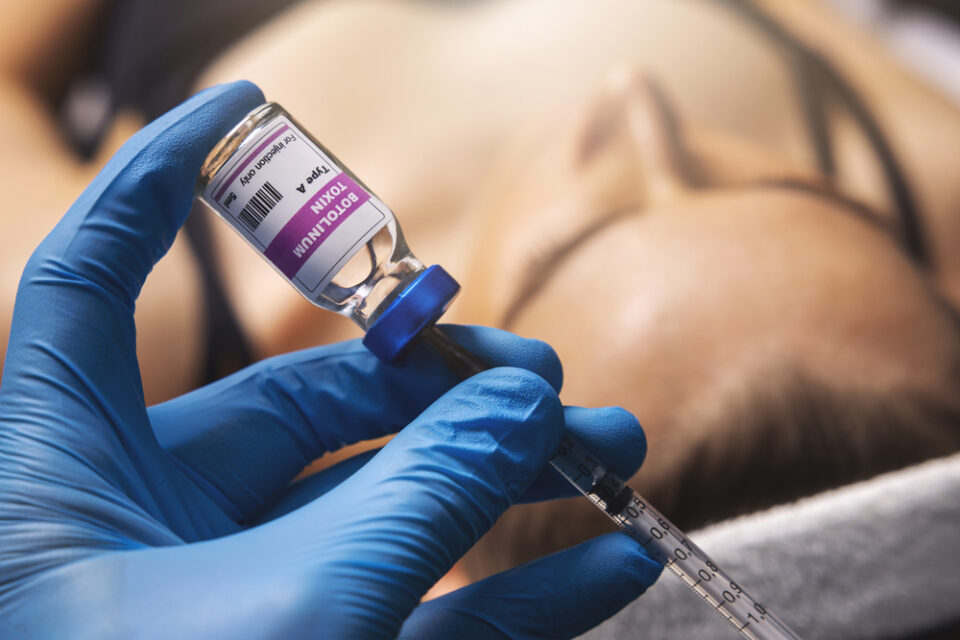
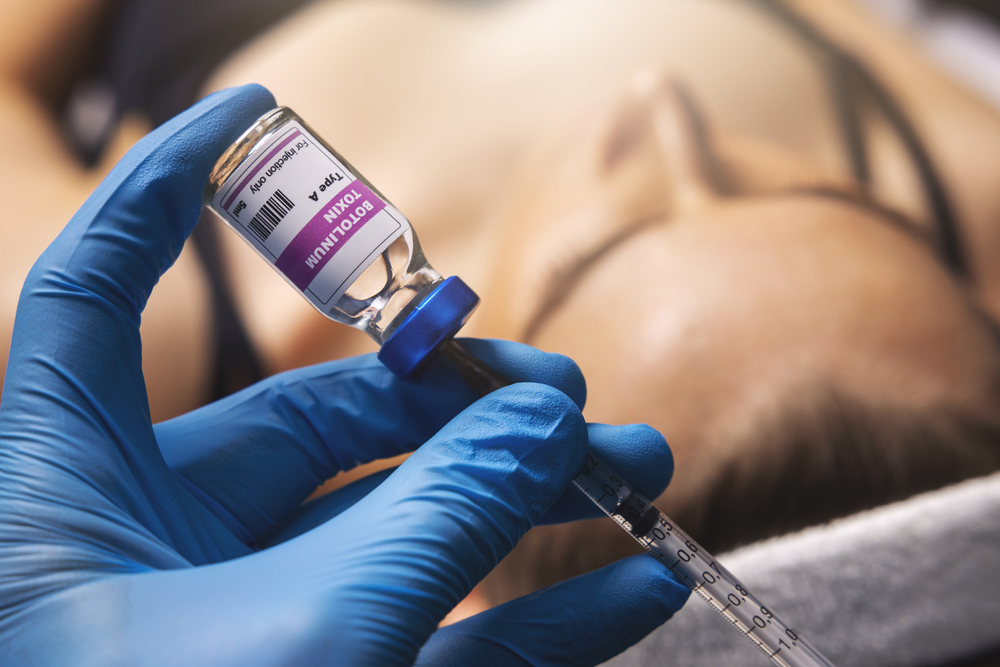
Botox effectively smooths upper facial lines by relaxing the muscles responsible for skin folding. It is unable to smooth out deeper wrinkles that remain visible even when the face is relaxed.
That gap is what forehead filler is designed to close. By restoring lost volume and lifting set-in creases, it treats what muscle-relaxing injections cannot reach alone. The provider’s expertise is crucial in this challenging injection site, more so than in other areas. The patient demographic has expanded, as more men are inquiring about it.
What Forehead Filler Actually Does
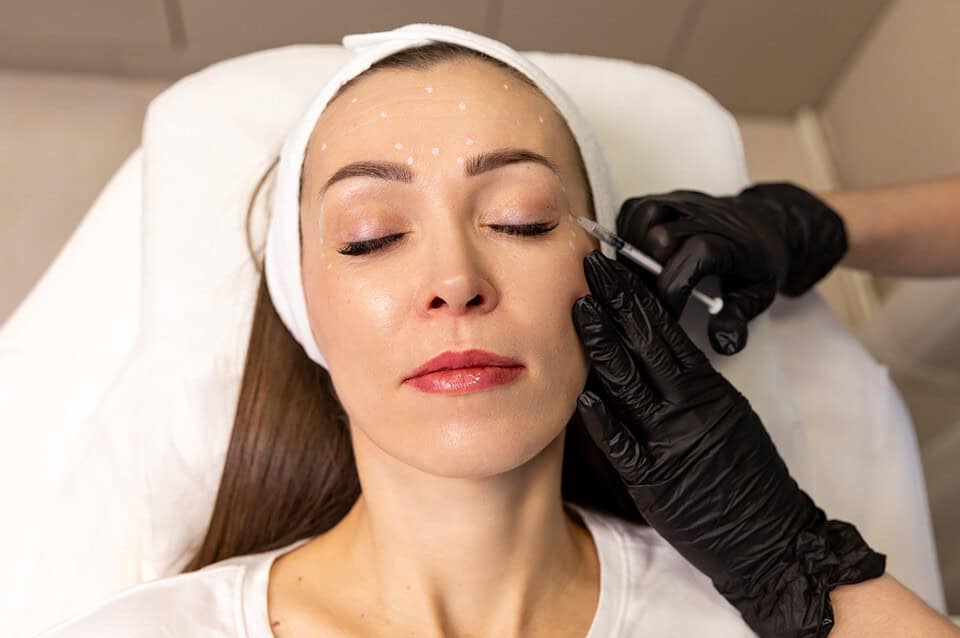
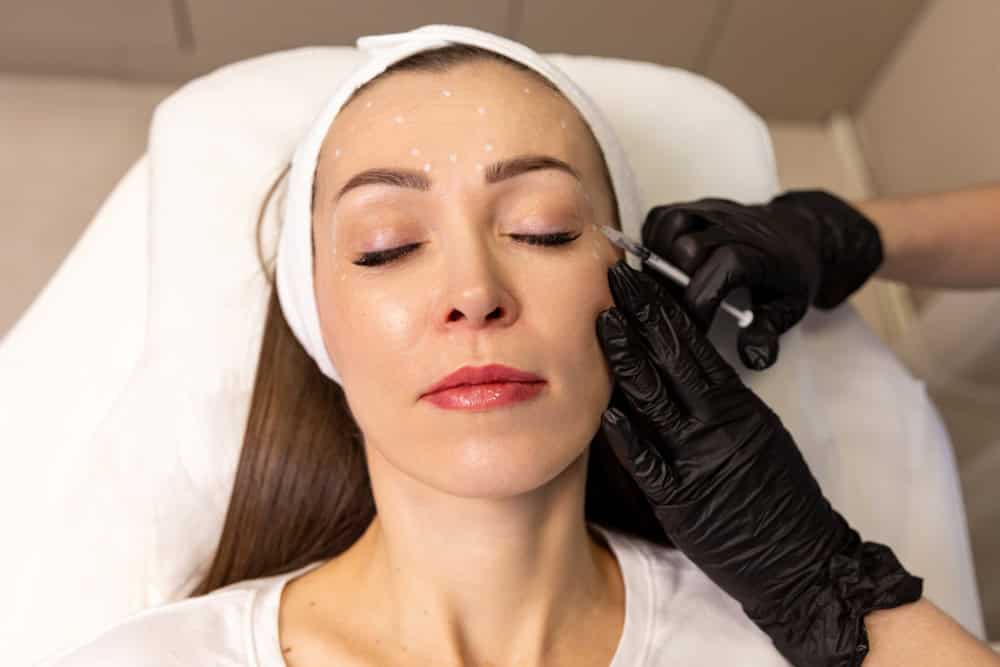
Filler for forehead wrinkles does more than smooth the surface. On the forehead, it works on several things at once:
- Restores volume to a flat or hollow forehead
- Smooths static lines that stay visible at rest
- Softens deep horizontal wrinkles that Botox cannot fully erase
- Subtly reshapes the forehead, adding a gentle curve or correcting small irregularities
Most injectors use hyaluronic acid (HA) fillers for this. HA is soft, easy to mold, and reversible, giving the injector room to fine-tune or correct the result if needed.
It’s most effective when used with Botox. Botox smooths muscles that cause wrinkles, while filler reconstructs the skin’s structure. They address both the origin of the lines and their appearance when used in combination.
Forehead Filler vs Botox for Forehead Lines
Botox and fillers are often described as competing options. They are not. They solve different problems, which matters when you are weighing up filler for forehead lines:
- Botox relaxes the frontalis muscle, the one that lifts the brows and forms horizontal lines. It prevents new dynamic lines and softens existing ones over time. For most people, it is the first step.
- Filler is a structural fix. It physically lifts static lines and replaces volume where the forehead has flattened.
For deep lines that do not fully respond to Botox, the most natural outcome usually comes from combining the two: Botox first, then filler for whatever lines remain.
Hyaluronic acid fillers are generally preferred here over collagen-stimulating types, mainly because they can be dissolved if the result needs adjusting.
Forehead Anatomy and Why Injection Technique Matters
The forehead carries more risk than most injection sites, and the reason is anatomy. It sits over major blood vessels, including the supratrochlear and supraorbital arteries, which link back toward the eye through the ophthalmic artery.
If filler is placed in the wrong layer or injected too fast, it can enter a vessel. In rare cases, it can cause skin damage or, very rarely, impact vision.
This is why forehead filler injection technique matters so much. Experienced injectors lower the risk with a few consistent habits:
- Placing filler deep, against the bone or under the muscle
- Injecting slowly and in small amounts
- Using a blunt-tip cannula instead of a sharp needle where suitable
The forehead is not the place to look for a bargain or an inexperienced provider.
Forehead Filler for Deep Wrinkles vs Fine Lines
Forehead lines are not all the same, and they do not all need the same approach:
- Fine, surface lines often respond well to Botox with a small amount of soft HA filler. Skin boosters or microneedling can help improve overall skin quality.
- Deeper, set-in creases need more. Filler for deep forehead wrinkles has to sit at the correct depth to lift the crease, and it is usually layered with Botox so the muscle does not simply fold it again.
One honest point is worth making: very deep, long-standing wrinkles can be softened but rarely erased. Results are best when the line is assessed at rest and in motion before anything is injected.
Male Forehead Filler
Male foreheads are built differently from female ones: broader and flatter, with a stronger brow ridge and a lower brow position. Good treatment keeps those features intact rather than softening them away.
For most men, the aim of male forehead filler is straightforward: reduce visible lines and restore lost volume without rounding the forehead or lifting the brow in a way that looks unnatural.
Men also tend to prefer minimal downtime and a conservative change. In practice, that usually means:
- Smaller volumes spread across more than one session
- Modest Botox doses that keep natural expression
- Filler is placed only where lines stay visible at rest
Results, Recovery, and How Long Forehead Filler Lasts
Forehead filler produces a visible change straight away, usually smoother skin and restored volume. Mild swelling and small bruises are common at first.
Here is the general timeline:
- Swelling and bruising settle within five to seven days
- The final, settled result appears at around two weeks
- Most patients return for a top-up at around twelve months
How long filler lasts in the forehead depends on the product, the depth at which it is placed, the injection technique, your metabolism, and how much the area moves. HA filler here generally lasts six to eighteen months. Pairing it with Botox tends to keep the result looking fresh longer, since less muscle movement means less stress on the filler.
Risks and Side Effects of Forehead Filler
So is filler in the forehead dangerous? For most people treated by a skilled injector, serious problems are rare. Even so, it helps to know the full picture.
Most side effects are mild and short-lived:
- Bruising, swelling, and tenderness
- Occasional small lumps, which usually settle within a week or two
The serious risks come from the forehead’s anatomy. A blocked vessel can interrupt blood supply and damage the skin, and in rare, documented cases, filler reaching arteries connected to the eye has caused changes to vision. Infection, granulomas, and delayed inflammatory reactions are also possible and more common with non-HA fillers.
Keeping the risk low comes down to the same things: an experienced medical injector, HA filler rather than permanent products, and a clinic that keeps hyaluronidase on hand with clear emergency protocols.

Forehead Filler Done With the Right Hands
Forehead filler is a precise, anatomy-led treatment, only as good as the hands carrying it out. At Nirunda International Aesthetic Clinic, the work is done by board-certified dermatologists, and the forehead is one of the areas they treat with filler.
A few things stand out:
- Only US FDA-approved HA fillers, namely Juvederm and Restylane, are reversible with hyaluronidase if a correction is ever needed
- Consultations tailored to each patient, with separate planning for female and male foreheads
- Botox-and-filler combinations with conservative volumes are favored over dramatic change
- A Bangkok clinic with strict safety protocols and clear post-treatment support
The forehead is no place for guesswork. Book a consultation at Nirunda Clinic to discuss filler injection for your forehead lines, where a board-certified dermatologist will advise whether filler, Botox, or a combination is the safest and most natural option for you.r goals.
References:
Long‐Term Performance and Safety of a Superficial HA Filler With Tri‐Hyal Technology on Different Facial Zones: Forehead, Cheeks, Crow’s Feet, and Upper Lips. Retrieved 22 May, 2026 from https://pmc.ncbi.nlm.nih.gov/articles/PMC11743021/
Visual loss after aesthetic facial filler injection: a literature review on an ophthalmologic issue. Retrieved on 22 May, 2026 from https://www.ncbi.nlm.nih.gov/pmc/articles/PMC11826751/
Hyaluronic acid filler-induced vascular occlusion—Three case reports and overview of prevention and treatment. Retrieved on 22 May, 2026 from https://onlinelibrary.wiley.com/doi/10.1111/jocd.16147
Frequently Asked Questions About Forehead Filler
Q: Which filler is best for forehead lines?
A: Hyaluronic acid (HA) fillers are usually the best choice for forehead lines. They are soft, easy to mold, and reversible, which gives the injector close control in a sensitive, higher-risk area. Collagen-stimulating fillers are generally avoided on the forehead because they cannot be easily dissolved.
Q: Does forehead filler hurt?
A: Discomfort is usually mild. The injector numbs the area with a topical anesthetic first, and many fillers also contain a small amount of local anesthetic. Most people describe a brief pinch or some pressure rather than real pain, and any tenderness afterward tends to fade within a day or two.
Q: What should you avoid after getting forehead filler?
A: For the first 24 to 48 hours, it is best to avoid touching or massaging the area, strenuous exercise, saunas, and direct heat. Alcohol and heavy sun exposure are also worth limiting for a couple of days, since both can make swelling or bruising worse. Your clinic will give you specific aftercare instructions to follow.
Q: How soon will I see a before-and-after difference from forehead filler?
A: There are really two stages. Straight after treatment, you will see an immediate lift in volume and smoother lines, though mild swelling can mask the true result for a few days. Once the swelling and any small bruises settle, usually within a week, the genuine before-and-after becomes clear, and the fully settled outcome is best judged at around two weeks.